
The Last Sanctuary: Why the Humble Dog Has Become Britain’s Newest Cultural Battleground
In the quiet, rhythmic life of a London cab driver, the passengers are usually a blur of commuters and tourists, but occasionally, the backseat plays host to a different kind of Londoner. For one driver this week, it was a 15-year-old dog, barely larger than a breadbox, sitting stoically on a protective pad and watching the city pass by with the serene indifference of an old soul. In English culture, this image is unremarkable; since the Victorian era, the domestic dog has been elevated from a working tool to “man’s best friend,” a status so deeply ingrained in the national psyche that it is often considered a hallmark of Britishness itself. However, as the demographics of Britain’s major cities shift at an unprecedented pace, this ancient bond is increasingly being tested by a cultural friction that many politicians are too hesitant to name.
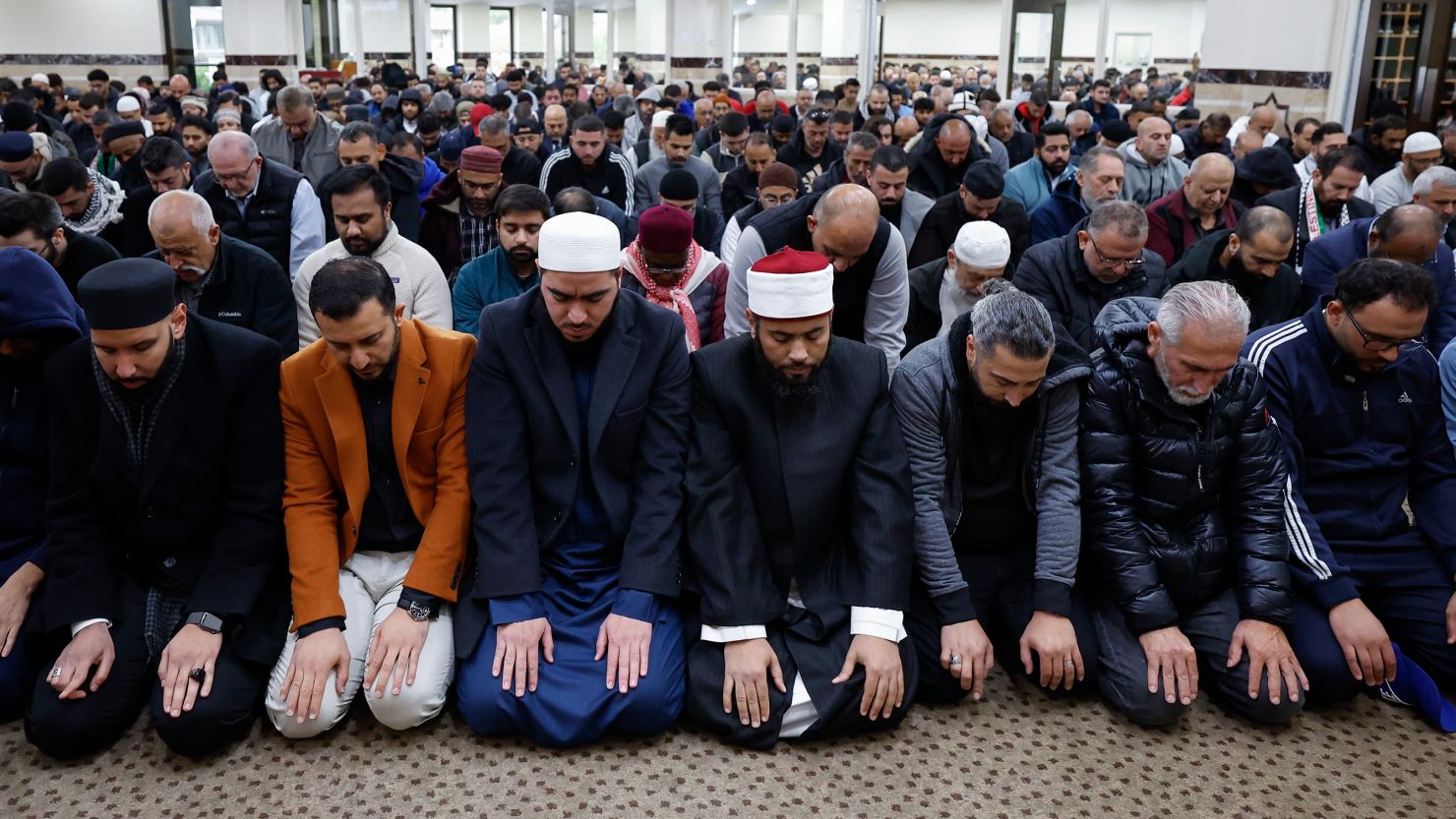
Across the United Kingdom, particularly in urban centers like London and Birmingham, the sight of a dog on a train or in a park is no longer just a mundane detail of daily life—it is becoming a flashpoint for a clash of civilizations. For many of the millions of Muslims who now call Britain home, dogs are viewed through the lens of religious jurisprudence as najis, or ritually unclean. While the Quran itself is relatively silent on the matter, Islamic tradition, particularly the hadith, emphasizes that the saliva and hair of dogs can nullify the ritual purity required for prayer. In a country where the Muslim population grew by 44% over the last decade to reach roughly 3.9 million, this theological stance is moving from the private sphere into the public square, creating a silent but potent struggle over who defines the “rules” of the street.
The tension recently spilled over into public view through a viral video recorded on a London train. In the footage, a Muslim man is seen repeatedly harassing a woman traveling with her small dog. The man, visibly agitated, threatens the animal and demands the woman “take it away,” eventually resorting to aggressive insults and threats of violence. For the native British observer, the incident was not merely a dispute over personal space; it was an act of cultural dominance. It signaled a refusal to adapt to the norms of the host nation, and instead, an attempt to enforce a foreign religious standard on a public space where dogs have been welcomed for generations.
This friction is not limited to the United Kingdom. Across the Atlantic, American commentators are beginning to note similar trends in “Muslim-majority” enclaves, where some activists have floated the idea of “dog-free zones” to accommodate religious sensitivities. In Morocco, reports of the mass culling of stray dogs ahead of the World Cup—amounting to an estimated 3 million animals—have served as a grim reminder to Westerners of how differently these animals are treated in the Islamic world. While Islamic scholars argue that dogs are “creatures of Allah” deserving of respect, the practical reality in many Muslim societies is one of avoidance, if not outright hostility.
The debate has even reached the hallowed ground of the British countryside. A recent segment on national television featured a liberal commentator claiming that the English rural landscape is “racist” because Muslims often avoid it. One of the primary reasons cited? The presence of dogs. The suggestion was that national parks should be made more “inclusive” by restricting or discouraging dog ownership to make Muslim visitors feel more comfortable. For many Britons, this was the ultimate “red line.” The idea that the very heart of the English landscape should be altered to accommodate a refusal to integrate is viewed by many as a form of cultural surrender.
Behind this clash lies a fundamental question of integration: Who adapts to whom? In the United States, the rhetoric is often more “Jack Blunt”—a direct assertion that if you move to a country, you do things their way. In Britain, however, the response from the “establishment” is frequently one of accommodation and apology. Critics argue that by making exceptions for religious sensitivities regarding dogs in taxis, hospitals, or parks, the state is effectively subsidizing the erosion of British culture. They see it as a “creeping Sharia” of social norms, where the discomfort of a minority group is given precedence over the long-standing traditions of the majority.
The biological reality of the dog only adds another layer to the conflict. Dogs are uniquely attuned to human emotion and environmental tension. In a notable incident in France, a video captured a dog immediately sensing the aggressive intent of two teenagers approaching a young girl; the animal went into “guardian mode” before the humans had even processed the threat. This protective instinct is exactly why dogs have been valued in Western society for millennia. Yet, for those who view the animal as unclean, this very utility is overshadowed by religious dogma. The dog’s ability to act as a social “sensor” makes it a natural enemy to those who wish to operate outside the established social norms of the West.
The religious justification for this aversion usually centers on the concept of ritually purity. Many Muslims believe that if a dog’s saliva touches their clothing, they must perform an elaborate washing ritual before they can pray. In the crowded confines of a London Underground carriage or a busy high street, the “threat” of a stray lick is constant. For the pet owner, the dog is a family member; for the devout Muslim, the dog is a walking impurity. This is not a misunderstanding that can be solved with a “diversity and inclusion” workshop; it is a fundamental disagreement on the nature of the domestic environment.
The cultural impact of this shift is visible in the changing face of British services. Some taxi drivers, citing religious grounds, have refused to carry blind passengers with guide dogs—a practice that is illegal under the Equality Act but continues to occur. When the state fails to enforce its own laws for fear of appearing “Islamophobic,” it sends a message that the social contract is negotiable. To the English patriot, this is another example of “two-tier” governance, where the protection of a religious sensitivity is prioritized over the rights of a disabled citizen or a traditional pet owner.
There is also a growing suspicion that the pushback against dogs is more than just a matter of hygiene. Some observers see it as an “act of dominance,” a way for a growing demographic to signal that they no longer feel the need to abide by the “old” rules of British life. By challenging the presence of dogs in public spaces, they are effectively claiming territory. If the dog—the most English of symbols—can be pushed out of the park or the train, then what else can be removed? The pub? The parish church? The cross of St. George?
The role of the internet in documenting these clashes cannot be overstated. In previous decades, a heated exchange on a train would have been a localized event. Today, it is filmed, shared, and analyzed by millions. This digital transparency has bypassed the mainstream media’s tendency to sanitize cultural conflict. When people see footage of a “man of another place” threatening a woman over a puppy, they don’t see a “vibrant multicultural exchange”; they see a threat to their way of life. It hardens the “us versus them” narrative that the political class has spent decades trying to suppress.
Economics also plays a subtle role. The “pet economy” in the UK is worth billions, supporting thousands of jobs in grooming, veterinary care, and retail. As parts of London and other cities become “dog-unfriendly,” local businesses feel the pinch. More importantly, the social capital generated by dog walking—the brief, friendly interactions between strangers in a park—is being lost in areas where the dog is viewed as an object of scorn. This further fragments a society already struggling with the collapse of social cohesion.
The contrast with the American approach is stark. In the U.S., the defense of the dog is often framed as a defense of “American values” and personal liberty. In the UK, the defense is more nostalgic, a mourning for a “green and pleasant land” that is slowly being paved over by concrete and cultural division. The British patriot feels a sense of loss that is difficult to quantify but impossible to ignore. They remember a London that was “for everyone” because everyone shared a basic set of cultural assumptions. That London, they argue, is being dismantled one grievance at a time.
For the London cabbie, the dog in the backseat is a reminder of what the city used to be: a place of quiet companionship and mutual respect. The fact that such a simple, ancient relationship is now a “controversial” topic is a testament to how far the social fabric has been stretched. The dog doesn’t care about the World Cup in Morocco or the hadiths of the Middle East; it only knows its master. And in the hearts of many British people, that loyalty is something worth defending, even if the government won’t.
The debate over man’s best friend is, ultimately, a proxy for the larger debate over the future of the West. If a society cannot agree on the place of a domestic pet in its public spaces, it has little hope of agreeing on more complex issues like law, education, or national identity. The dog has become a silent witness to a nation in transition, a sentinel guarding a culture that is increasingly under siege from within.
As the “silent majority” begins to find its voice, the humble dog may well become the symbol of their resistance. It is a creature that asks for little but gives total loyalty—a stark contrast to a political class that many feel has offered total betrayal. In the end, the British people may decide that if they have to choose between their traditions and the “sensitivities” of those who refuse to adapt, they will choose the dog every time.
The establishment can label this as “racism” or “bigotry” all they want, but the reality on the street is far simpler. People want to live in a country that looks, feels, and acts like home. They want a London where a 15-year-old dog can sit in the back of a cab without being a political statement. Until the government recognizes that integration is a requirement, not an option, the “dog wars” of Britain’s streets will only continue to escalate.
In the final analysis, a country is more than just a collection of individuals living in the same geographic area; it is a shared story. For the British, the dog has always been a key character in that story. To remove the dog is to tear out a page of the book. And as the crowds in London are beginning to show, the British people are finally ready to stop the book from being closed forever.
The “British awakening” is not just about votes and borders; it is about the right to hold on to the things that make life in England meaningful. It is about the right to walk a dog in a park without being harassed, and the right to expect that guests in one’s country will respect the house rules. If that makes someone “far-right” in the eyes of Sadiq Khan or the BBC, then millions of Britons are beginning to realize they are perfectly comfortable with the label.
The fog may still cling to the Thames, and the tall buildings may still dominate the skyline, but the soul of the city is found in the small things—the barrow boy, the local pub, and the dog on the backseat. Those who seek to erase these things are not building a “stronger” Britain; they are building a hollow one. And the people of Britain, after a long silence, are finally saying “enough.”


