
Seattle’s Socialist Mayor TOLD Millionaires “Bye” – Now She’s BEGGING Them To Stay To Save The City
On a crisp spring day in 2026, Howard Schultz did something that sent ripples far beyond the Pacific Northwest.
The man who transformed a handful of Seattle coffee shops into a global empire worth billions quietly relocated to a $44 million penthouse in Miami.
The timing was impossible to ignore. It came on the same day Washington state passed a new 9.9 percent income tax on earnings above one million dollars.
Schultz, who had built Starbucks into one of the city’s most iconic institutions and the first major American company to offer health insurance to part-time workers, had finally had enough.
This was no ordinary corporate relocation. Schultz was not some distant hedge fund manager or tech executive born into privilege.
He grew up in the Bayview Houses, a federally subsidized Brooklyn housing project where 150 families shared one elevator.
His father, a delivery driver, slipped on ice in 1961, broke his ankle, lost his job, and with it the family’s health insurance.

His mother was seven months pregnant. There were nights the family did not eat. That childhood trauma became the fuel for Schultz’s life work.
He earned a football scholarship to Northern Michigan University, became the first in his family to graduate college, and eventually turned a small Seattle coffee roaster into a company that employed hundreds of thousands and changed how America drinks coffee.
For four decades, Schultz poured his energy into Seattle. He remembered the pain of his father’s broken ankle and built a company that tried to prevent others from suffering the same fate.
Starbucks became a symbol of Seattle’s progressive corporate culture. Then the city changed. Taxes multiplied.
Regulations tightened. Political rhetoric grew openly hostile toward business. Amazon began shifting thousands of jobs across Lake Washington to Bellevue.
Boeing had already left. Now Starbucks itself announced plans for what insiders described as a second headquarters in Nashville, Tennessee, a state with no income tax and aggressive employer incentives.
The final straw came when Seattle’s new mayor, Katie Wilson, responded to concerns about millionaires leaving the state.
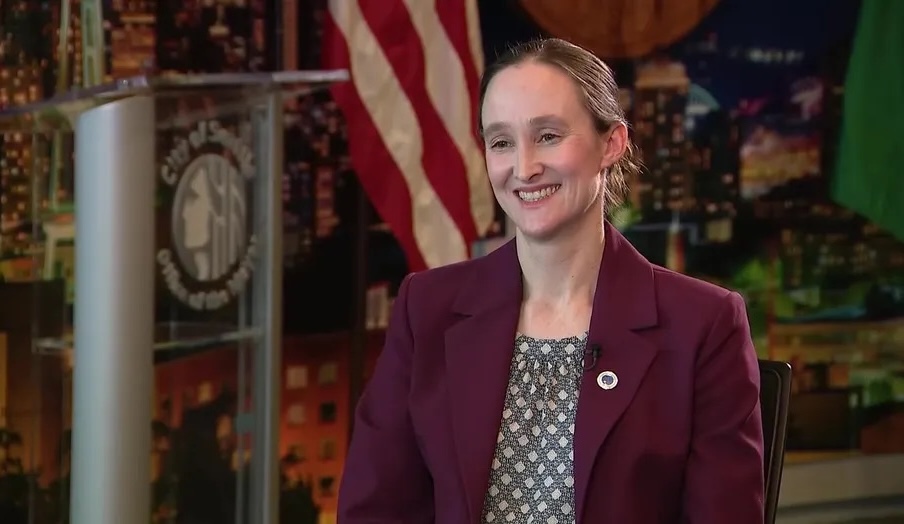
At a public event, she dismissed the warnings as “super overblown” and added with a wave of her hand and a laugh, “And if the ones that leave, like bye.”
The audience cheered. The clip spread like wildfire. For a city already grappling with 36 percent office vacancy rates in downtown Seattle, the highest of any major U.S.
Metropolitan area, the mayor’s casual dismissal felt like pouring gasoline on a fire. The numbers behind Seattle’s decline are sobering.
Downtown office vacancy has climbed above 38 percent in some estimates. Amazon has moved roughly 10,000 jobs out of the city proper.
Oracle and Meta have announced significant layoffs in the region. The city faces a $140 million budget gap heading into 2027, with projections suggesting it could exceed $300 million by 2029.
Moody’s has placed Washington state on a negative credit outlook. Yet instead of addressing the root causes—high taxes, regulatory burdens, and a business climate perceived as hostile—the response from city leadership has often been to double down or pivot to government-run solutions.

Wilson’s administration unveiled a $70 million plan to build five city-owned grocery stores after Amazon closed all 72 of its Amazon Fresh and Amazon Go locations nationwide in January 2026.
The flagship project in East Harlem is projected to cost $30 million and will not open until 2029.
Industry veterans were stunned. A typical 15,000-square-foot private grocery store can be built for under $10 million, and empty retail spaces sit available nearby for far less.
The disparity highlights the hidden costs of government projects: layers of bureaucracy, environmental reviews, and prevailing wage requirements that inflate expenses dramatically.
This pattern is not unique to Seattle. It reflects a broader municipal death spiral playing out in several major American cities.
High taxes and regulatory hostility drive businesses and high earners away. The tax base shrinks.
Services strain. Taxes rise again on those who remain. More departures follow. The Columbia Tower Club, a premier business venue for 41 years perched on the 76th floor of Seattle’s tallest building, recently closed its doors, citing an uncertain business climate.
Its operators, a Dallas-based company, looked across the street at City Hall and decided the risk was too great to stay.
The human impact is felt at the street level. When Amazon Fresh stores on Long Island closed, 135 employees received sudden termination notices.
In Harlem, the shutdown of a Pathmark supermarket left residents relying on local farm stands for fresh produce.
Independent bodegas struggle under the same pressures: rising rents, taxes, shoplifting, and shrinking margins. The president of the National Supermarket Association described an environment where even long-established businesses are breaking.
The psychological and imitative nature of corporate decision-making accelerates the exodus. When visible leaders like JPMorgan Chase CEO Jamie Dimon shift significant operations to Texas, it provides cover for others to follow.
No executive gets fired for making the same move as one of Wall Street’s defining institutions.
Capital flows to environments where the math works. States like Florida and Tennessee, with no income tax and pro-business policies, become magnets.

Seattle still possesses tremendous strengths: a highly educated workforce, natural beauty, and a legacy of innovation.
Recovery is possible if leadership shifts toward pragmatism—reducing barriers, creating predictable environments, and treating businesses as partners rather than adversaries.
The alternative is continued hollowing out, more empty towers, more departing employers, and taxpayers shouldering ever higher costs for diminishing returns.
Howard Schultz’s departure is not merely one billionaire’s exit. It is a symbol of what happens when a city decides ideology matters more than arithmetic.
The boy from the Brooklyn projects built an empire in Seattle because he believed in opportunity and second chances.
His city’s mayor waved goodbye as he left. The lesson extends far beyond the Pacific Northwest.
Cities that lose sight of the basic math of economic vitality risk becoming cautionary tales rather than success stories.
The empty 76th-floor club with its million-dollar views stands silent now, a quiet monument to choices made over years.
Its bare floors and darkened lights are more than an abandoned dining room. They are a mirror reflecting the consequences of decisions that prioritized short-term political points over long-term sustainability.
Whether Seattle can reverse course before the spiral becomes irreversible remains to be seen. The boy from the projects showed what one determined individual can achieve.
The question now is whether the city he left behind still remembers how.


