
Billion-Dollar Trafficking Empire Destroyed — 100+ Victims Rescued in Night Raid | FBI EXPOSED
Operation Tide Break: How a Billion-Dollar Human Trafficking Syndicate Hijacked the Miami Infrastructure
MIAMI, Fla. — In a quiet residential home in Little Havana, the scene at 4:41 a.m. on August 22, 2025, seemed almost domestic. A ceiling fan clicked softly above a dining room table littered with mundane items: a coil notebook, motel key sleeves, and three passports. But to the federal agents who breached the door, the house was not a home; it was a node in a sophisticated, $1.4 billion logistics network that had successfully turned the mechanisms of South Florida’s tourism and labor markets into a pipeline for human exploitation.
Hidden in a pantry behind bulk bags of rice, agents discovered a false shelf containing $680,000 in vacuum-sealed cash and a ledger that effectively “broke” the case. It was not merely a list of names; it was a master manifest of vessel rotations, fuel purchases, and labor payout percentages. It was the blueprint of a cartel-grade trafficking enterprise that treated human beings as time-sensitive cargo.
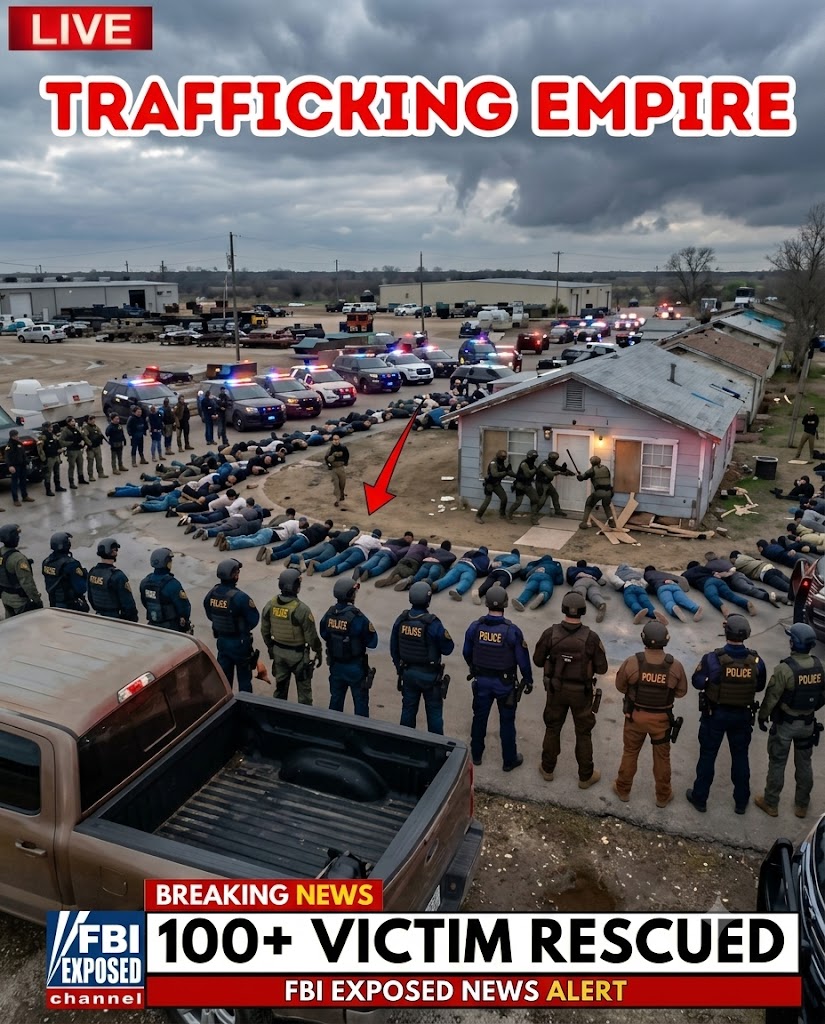
When the dust settled on “Operation Tide Break,” a massive, multi-agency strike involving the FBI, HSI, the Coast Guard Investigative Service (CGIS), and the IRS, authorities had rescued 103 victims, executed 58 arrests, and dismantled 19 shell companies. But for investigators, the real horror was the method: the traffickers had not built a parallel world to hide their work—they had woven it into the very fabric of Miami’s legitimate economy.
The Infrastructure of Exploitation
The investigation began nearly a year earlier, not in a dark alley, but on the water. In September 2024, a Coast Guard cutter intercepted a 40-foot sport-fishing vessel drifting south of Key Biscayne without running lights. The captain claimed engine trouble, but the deck was devoid of fishing gear. Instead, huddled below deck were 12 passengers, six of whom wore color-coded plastic bracelets.
For the traffickers, these bracelets were more than identifiers—they were logistics tools. They represented categories: victims destined for the sex trade, laborers for roofing crews, or minors waiting for exploitative sponsors.
Federal agents soon realized that this was not a loose group of opportunistic smugglers. It was a professionalized corporation. The syndicate utilized a network of 19 shell companies—entities like Blue Current Staffing, Marazul Excursions, and Canary Guest Services—to provide a facade of legitimacy. On paper, these companies were tour operators, temp labor agencies, and import brokers. In practice, they performed intake, transport, document fraud, and payment laundering.
“This was no longer a smuggling case,” said one federal investigator. “It was a cartel-grade logistics enterprise embedded in the legal infrastructure of South Florida, protected by corrupted service providers.”
The “Business” of Trafficking
The syndicate’s success relied on administrative fluency. By embedding themselves into the tourism, hospitality, and labor sectors of Miami, the traffickers leveraged the city’s inherent “administrative complexity” as cover.
Their operations were partitioned to ensure that no single person held too much information. Boat captains handled the maritime arrivals; a hospitality shell company managed the “clean” motel rooms; an accounting suite in Doral laundered the profits; and debt brokers managed the labor exploitation.
Key Nodes in the Network:
The Logistics Brain: Esteban Varela, a prominent shipping consultant, reportedly oversaw route timing, vessel acquisition, and enforcement avoidance, viewing his victims through the lens of a schedule.
The Hospitality Front: Sophia Mendez used her company, Canary Guest Services, to provide the illusion of legitimate hospitality for safe houses, keeping intermediaries calm by using the language of “service” and “accommodations.”
The Financial Engineer: Daniel Price, a licensed accountant, processed offshore invoices and disguised extortion payments as legitimate business reimbursements, ensuring the money flowed as easily as the victims.
The network used every piece of South Florida infrastructure as a tool: marina offices in Coconut Grove provided weather overlays to time arrivals; warehouses in Medley and Hialeah served as relay nodes equipped with shower stalls and burner phones; and labor contractors used debt ledgers to keep victims tethered to their jobs.
The Human Cost: Geography as Coercion
For the victims, the reality of the network was a profound betrayal of geography. Nadia St. Flur, a 19-year-old who was given a pink bracelet upon arriving in Miami, described the terror of arriving in a city that looked perfectly normal. Through the van windows, she saw gas stations, palm trees, and morning traffic—the hallmarks of a free, prosperous society—while being driven to a holding cell.
“The moment that broke her was realizing the people receiving her were calm, organized, and already knew where she would sleep, what debt she supposedly owed, and which phone she would be allowed to use,” an investigator recounted.
The syndicate turned the city into a trap. Neighborhood duplexes became holding cells; luxury marinas became intake gates; and temporary labor agencies became debt-enforcement brokers. Every victim was converted into a category, and every category had a market price.
Operation Tide Break: The Takedown
The synchronized strike on August 22, 2025, was designed to be a total containment. Using “compartmented timing” to prevent leaks, federal teams hit seven safe houses, three marinas, two warehouses, and multiple offices across Doral, Homestead, and Miami.
The operation was so precise that even when an emergency reroute order was intercepted on an accountant’s messaging app—directing boat crews to divert to a private dock near Islamorada—Coast Guard assets were already in position to box the vessels in.
The evidence seized was not just criminal; it was clinical. Agents recovered occupancy tables, fuel efficiency calculations, and handwritten ledgers that tracked victims with the same cold, calculating detail a shipping firm uses to track container spoilage or transfer costs.
“The evidence inventory explained the scale,” noted one agent. “They weren’t just managing people; they were managing ‘risk’ and ‘efficiency.’ That kind of evidence does more than prove a crime—it proves design.”
The Shadow of Infrastructure
As the legal proceedings moved into 2026, with racketeering, forced labor, and money laundering charges filed against the principal defendants, the case exposed a uncomfortable truth: the Miami network did not thrive because it was unusually violent; it thrived because it was administratively invisible.
The infrastructure that allowed this $1.4 billion syndicate to grow remains largely intact. Docks, hotels, and labor markets are still the backbone of the region’s economy. The “Tide Break” investigation proved that a well-funded, disciplined criminal enterprise can turn these systems into a trafficking platform if the institutions that manage them fail to look beyond the “ordinary paperwork.”
The final warning from the federal government is sobering. While the command structure of the Varela network was fractured, the seized devices revealed that the group had already prepared for its own exposure. Draft restructuring memos, alternate vendor names, and plans for shifting operations further north were already in play.
“Trafficking at this scale does not survive on violence alone,” the final investigative report concluded. “It survives on infrastructure. It survives on hotels that do not ask enough questions, on labor markets that reward cheap bodies, and on professionals willing to convert criminal movement into ordinary paperwork.”
Miami served as the petri dish for this trafficking model because it offered the perfect overlap of tourism, hospitality, and freight. But as the case records indicate, this is not a Miami-specific problem. It is a systematic vulnerability.
If the systems that regulate Miami’s ports, hotels, and labor markets drift back into “silence,” the model is ready to be leased again. The traffickers did not invent a new world; they simply learned how to live within the cracks of ours. And until those cracks are sealed, the bracelet numbers, the route maps, and the cold logic of the ledger will continue to pose a threat that no single night raid can permanently erase.


